Sunday, 6 April 2014

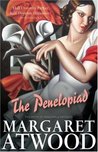
The Penelopiad by Margaret Atwood

The PenelopiadThe Penelopiad by Margaret Atwood

An ingenious retelling of the nostos of Odysseus from a feminist point of view. Myth wouldn't be myth unless there are many versions of the same story and this one is as valid as any other. Like all good myths it is both entertaining and thought-provoking and well worth engaging with. Above all it is told by a master storyteller with a clever and subtle use of a chorus in a nod to classical Greek tragedy, and a fine appreciation of the nuances of Homer's original. Very good indeed.


Saturday, 5 April 2014

The Looking Glass War by John le Carre

The Looking Glass WarThe Looking Glass War by John le Carré


A story that explores vanity and an awkward nostalgia for war time glory during the height of the Cold War. Control seems to be embroiled in some dirty business and is abetted by Smiley, a minor character in this volume. Deep psychological angst on several sides yet there is a kind of honour among spooks in spite of 'war rules'. There's no glamour here, just men behaving badly and engaging in subtle betrayal, a peculiarly English past-time. A gradual build-up of suspense and a very grim picture of life in the DDR, nevertheless, it makes a compelling read.


Tuesday, 1 April 2014

The Broken Road by Patrick Leigh Fermor

The Broken Road: Travels from Bulgaria to Mount AthosThe Broken Road: Travels from Bulgaria to Mount Athos by Patrick Leigh Fermor


Like many others I'm sure, I've waited a long time to read of the completion of the journey and am grateful to Artemis Cooper and Colin Thubron for editing this, the final part of this wonderful journal. PLF's descriptive prose is a delight and his boyish enthusiasm for people and place shines through. A glimpse of a now, long-forgotten world of Balkan and Central European kingdoms recovering from one disastrous war yet anticipating another, this account of a wandering on foot with all its range of varied emotions, embodies both youthful optimism and hints of a kind of world-weariness that belies the author's relative youth and inexperience. It is a fascinating account of a journey from the Iron Gates, through Bulgaria, Romania and back through Bulgaria again to the iconic Constantinople. PLF's subsequent wandering through the monastries of Mount Athos complete the adventure. Travel writing at its very best.


Friday, 14 March 2014

Desert by J. M. G. Le Clezio

DesertDesert by J.M.G. Le Clézio


A moving story of colonial barbarity against an uncomprehending people, a true clash of civilizations in the name of greed and power. Within it are incredibly striking portraits of children: Nour, Lalla and Radicz, victims of circumstance and possessors of an indomitable spirit who negotiate a cruel, callous and brutal adult world with courage and equanimity. It is at once a story of great sadness, of humiliating defeat, yet at the same time it is a story of triumph, of humanity, and determination. It is both uplifting and tragic, a true epic. Its overwhelming message is that steadfastness and hope will conquer adversity, eventually. A book to be savoured and then reflected upon, time and time again. Thoroughly recommended, but not for the faint-hearted.


Thursday, 13 March 2014

Tomorrow by Graham Swift

TomorrowTomorrow by Graham Swift


A mother's reflection on her life, loves and the nature of relationships, and the secrets. Not quite what I expected of Graham Swift, but well-written all the same. The reservation I have concerns the narrative and it's telling. A middle-aged woman lies sleepless at home alongside her snoring husband. She's unable to sleep because they have to impart something to their sixteen year-old twins, something of great import - or is it? The first person narrative seems overly long yet it is difficult to imagine it being quite as convincing if it were any shorter. Its particular relevance to me is, that like the two principal characters, I was born in 1945, and was thus also a member of that lucky generation. It is that that is worth dwelling on, just how fortunate we of that generation have been. And that's what I would thank Graham Swift for, reminding me that I have much to be grateful for.


Sunday, 9 March 2014

With the Kisses of his Mouth by Monique Roffey

With the Kisses of His Mouth: A MemoirWith the Kisses of His Mouth: A Memoir by Monique Roffey


I've been reading this memoir on and off for a year or so. In a way it explains why books get remaindered, potential readers are unsure about them, and they tend to put them back on the shelves rather than take them to the cash desk. Moreover, I'm left with two questions: why did the author decide to publish this self-centred, self-indulgent, hedonistic account of her sexual adventures? I can understand why she wrote it, after all writing about experiences, good or bad, can have a cathartic effect, but to publish this intimacy? Presumably, an agent or an editor thought it might be a good idea based on the author having been shortlisted for the Orange Prize. The second question is why did I bother to read it to the bitter end? Simple curiosity? literary voyeurism, titillation? I honestly don't know, but what I do know is that reading this book I entered a metro-sexual world vicariously, and it's a world I would not want to enter in reality. It's a world I feel that I don't need to know and would be wary of. Easy to dismiss it as New Age twaddle, but that does a disservice to Roffey whom I think, wrote from the best of motives. Having said that, public catharsis carries obvious risks and Roffey was brave to accept such risks, but courage alone is not enough to justify the publication of this rather mediocre memoir. Nevertheless I look forward to reading The White Woman on the Green Bicycle, the novel that was shortlisted for the Orange Prize for Fiction 2010.


Sunday, 2 March 2014

Travels With HerodotusTravels With Herodotus by Ryszard Kapuściński


A difficult book to classify, it is a memoir of a Polish foreign correspondent of high repute and an homage to Herodotus, author of The Histories. I came late to Herodotus, probably as the result of a too narrow an education. The Anthony Minghella film of Michael Ondaatje's The English Patient was my first experience of the profound effect that The Histories has on the lives of people who are fortunate to come to Herodotus early in Life. Minghella himself has said that 'The Herodotus is the novel's metonym containing as it does the souvenirs, kind and cruel, of a love affair, of an expedition, of the necessary lyrics and maps.'.

Kapuscinski vividly describes his first encounter with Herodotus. He has just been told that he is about to take his first ever trip outside Poland: 'Tarlowska [his editor-in-chief] reached into a cabinet, took out a book, and handing it to me said: "Here, a present, for the road." It was a thick book with a stiff cover of yellow cloth. On the front, stamped in gold letters, was Herodotus, THE HISTORIES.' From that moment on, Herodotus is his constant companion on journalistic assignments throughout the world. A source of constant delight and a perceptive guide to human nature. And it is this delight that drives this memoir through India, China and his beloved, Africa.

Last Christmas I treated myself to a copy of Tom Holland's new translation of The Histories, after all, my Penguin Classics edition of the De Selincourt translation is getting somewhat worn.